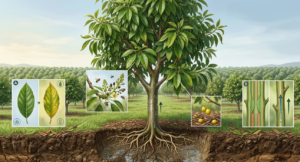
The avocado pollination It is one of the most crucial processes in fruit productivity and quality. Understanding how it occurs, what factors influence it, and how to manage it correctly can make the difference between an average harvest and high-yield production.
At Fruty Green, we apply sustainable and scientifically backed practices to optimize every stage of cultivation. In this article, we explain how to ensure effective pollination in Hass avocados and guarantee a healthy and abundant fruit set.
Avocado pollination: a key process for productive success
Avocado pollination involves the transfer of pollen from male to female flowers. However, this process is not as simple as in other fruit trees, since avocados exhibit a phenomenon known as protogynous dichogamy, meaning that the female and male phases of the same flower do not coincide.
This behavior makes the timing and presence of pollinators fundamental to ensuring effective fertilization and, therefore, optimal fruiting. Want to better understand how avocado pollination occurs? We invite you to watch this short video: “Avocado pollinators: the secret behind a good harvest.”
Types of flowers and their influence on pollination
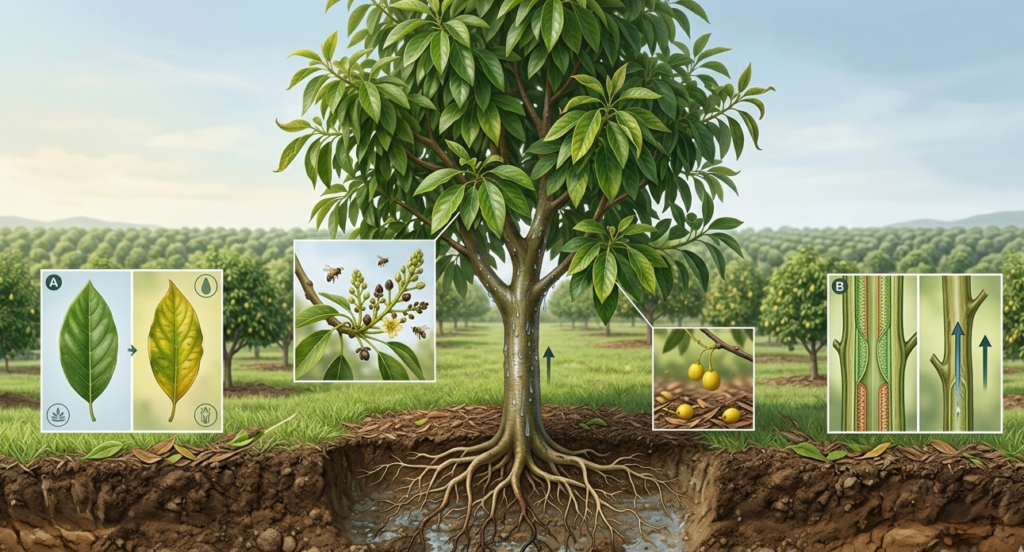
Avocado flowers are divided into two groups: type A and type B.
- The type A flowers They open as female in the morning and as male the following afternoon.
- The type B flowers, Instead, they open as feminine in the afternoon and as masculine the following morning.
This alternation allows cross-pollination to occur when both varieties coexist in the same orchard. Therefore, at Fruty Green we recommend mixing type A and type B trees, ensuring that there are always female and male flowers open simultaneously to maximize pollen exchange and improve fruit set.
Are you interested in learning more about avocado development? We invite you to read our article: “Avocado Growth Stages: A Technical Guide for Successful Cultivation.”
Environmental conditions that affect avocado pollination
Climate is a crucial factor for successful pollination. Ideal temperatures for this process range from 18°C to 25°C. When temperatures drop below 10°C or rise above 30°C, pollen viability decreases and flower opening is impaired.
Likewise, moderate relative humidity favors pollen germination, while excessive rain or drought can disrupt flowering and pollinator activity. At Fruty Green, we monitor microclimatic conditions to adapt irrigation and management practices to the specific needs of each stage.
The role of pollinators: indispensable allies of cultivation
Avocado pollination depends largely on the action of natural pollinators, primarily honeybees and native species. These insects transport pollen between flowers, ensuring effective fertilization.
How to encourage the presence of pollinators
- Avoid pesticides during flowering: Use bee-friendly products and apply them at times when there is no pollinating activity.
- Incorporates complementary flora: Plant flowering species around the crop that bloom at different times to provide a constant food source for the bees.
- Place beehives strategically: Ideally, there should be 2 to 5 beehives per hectare, located in sunny areas, protected from the wind and with access to water sources.
At Fruty Green, we work alongside specialized beekeepers to ensure an effective interaction between the hives and the trees, thus enhancing pollination and crop yield.
Agronomic practices to improve pollination
In addition to environmental and biological conditions, good agricultural practices are key to ensuring efficient pollination.
Pruning and canopy management
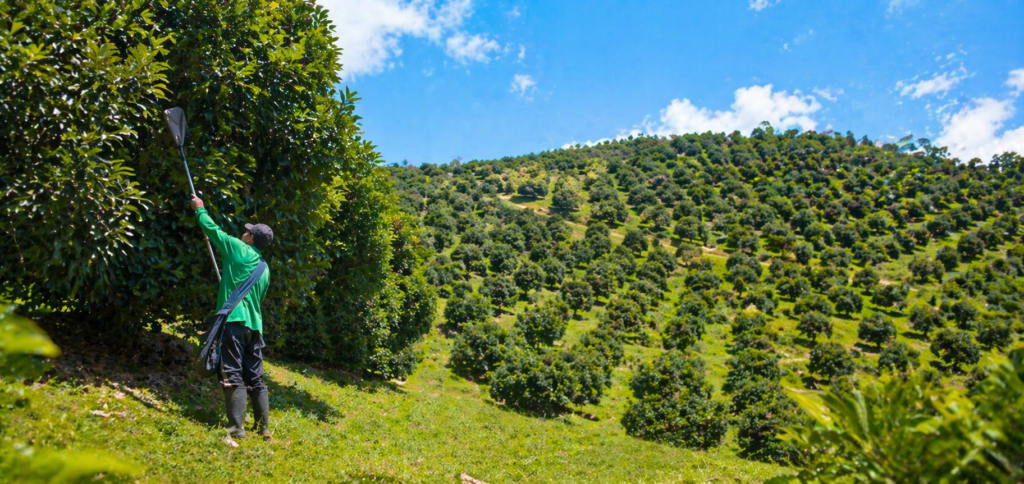
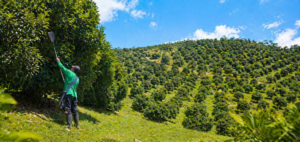
Proper pruning allows light and air to penetrate, improving flowering and facilitating pollinators' access to the flowers. At Fruty Green, we perform selective pruning to maintain balanced and healthy canopies.
Fertilization and nutrition
Balanced nutrition directly impacts flower quality. Elements such as boron, zinc, and calcium are essential for pollen development and fertilization. Therefore, we conduct regular soil and foliar tissue analyses to adjust nutrient dosages and ensure each tree receives the appropriate nutrients.
Control of pests and diseases
Pests such as thrips and mites can directly affect the pollination process. We implement integrated pest management (IPM), prioritizing biological controls and preventative practices that protect both crop health and pollinators.
Want to learn how to plant avocados correctly? We invite you to read our article: “Planting Distance for Avocados: A Technical Guide for Successful Cultivation.”
Monitoring and evaluation of the process
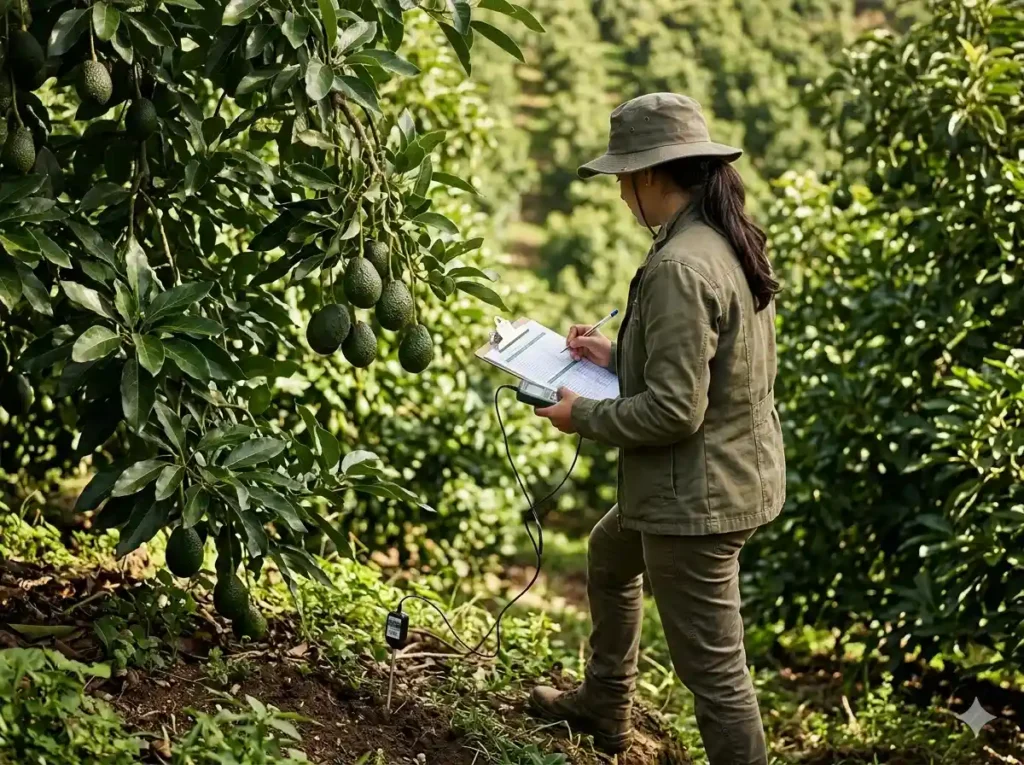
Avocado pollination must be carefully monitored. Observing flower opening, pollinator activity, and fruit set percentage allows for the timely identification of problems and the implementation of corrective measures.
At Fruty Green we implement recording systems that integrate data on temperature, humidity, bee visits and fruiting rates, allowing us to optimize the management of each plot and increase productivity.
Pollination, the heart of a successful harvest
Avocado pollination is not a process that occurs by chance, but the result of technical planning, a harmonious interaction with nature, and constant crop management.
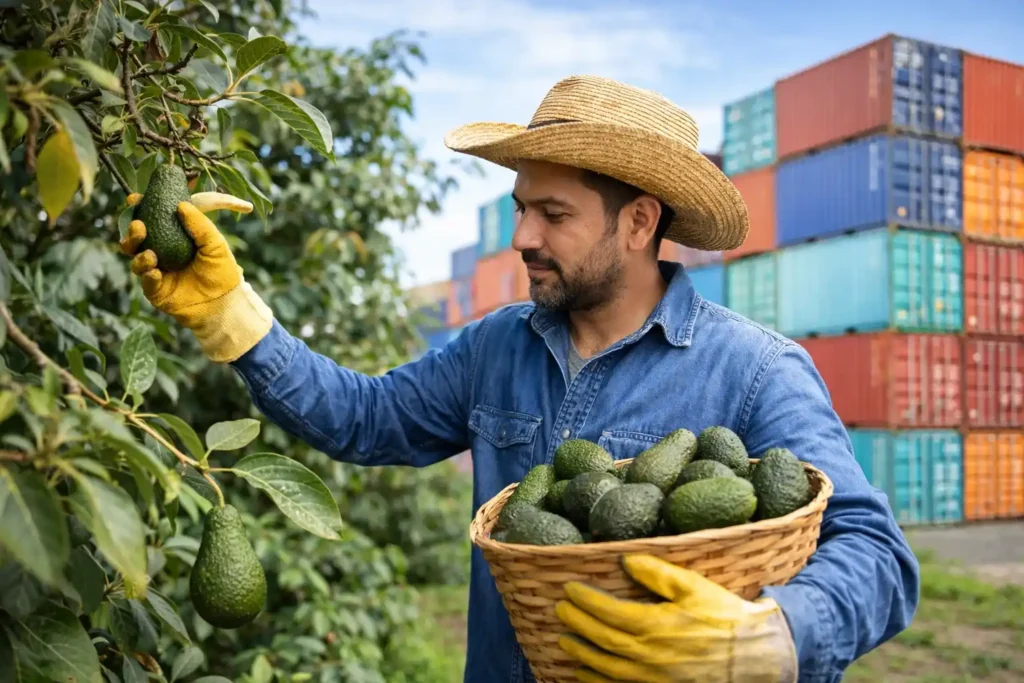
At Fruty Green, we understand that good pollination is the foundation of sustainable and export-oriented production, and that is why we apply strategies that combine science, innovation and respect for the environment.