If you're wondering why your avocado tree isn't bearing fruit, you're not alone. This is one of the most common problems in avocado cultivation, even in trees that appear healthy and vigorous.
The key is not to apply more fertilizer or prune harder, but to identify at what stage production is being lost: if it does not flower, if it flowers and does not set fruit, or if it sets fruit and the fruit falls off.
In this practical guide we explain how to diagnose the problem step by step and what adjustments to make in the field to restore the productivity of your tree.
Diagnosis: At what stage is production lost?
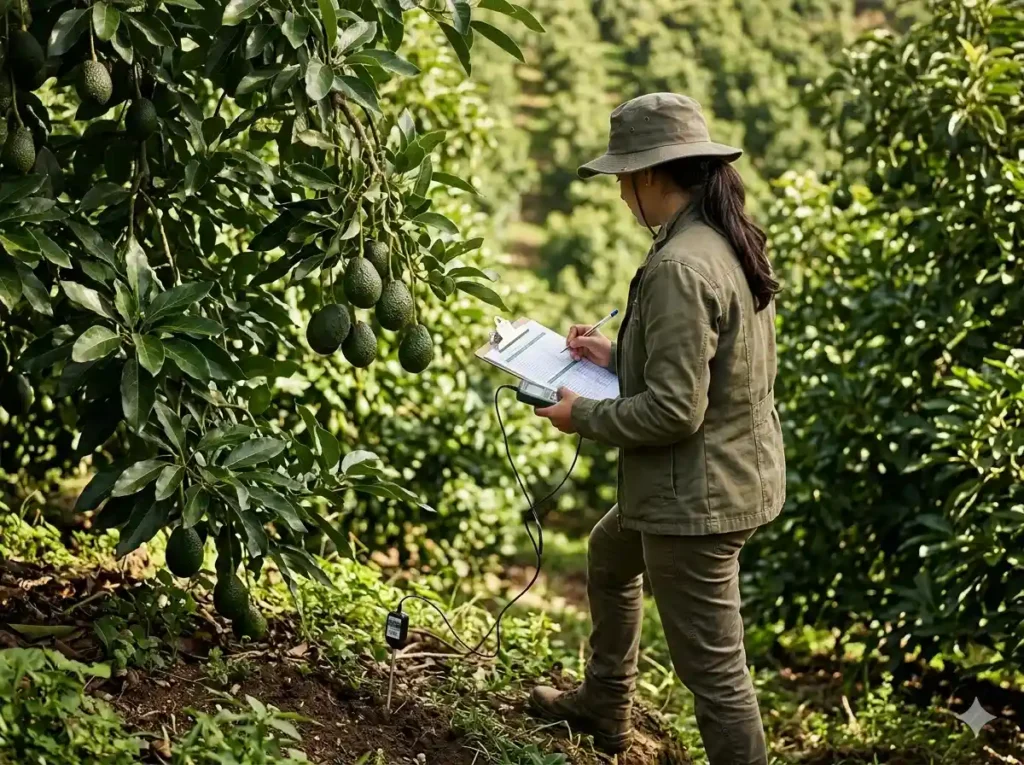
Before implementing any corrective measures, it is essential to identify the bottleneck. The goal is to pinpoint where the process is failing using simple field signals and make precise adjustments.
Recommended review order:
- Age of the tree and whether it is grafted
- Presence of flowering
- Bee activity
- Climatic conditions during flowering
- Soil and root condition
- Irrigation management
- Nutritional balance
Age and plant material: Is the tree ready to produce?
Many cases are explained by the fact that the tree is still in its juvenile phase or because the plant material is not suitable.
Cause 1: Very young tree (juvenility)
A grafted avocado produces fruit sooner than one grown from seed, but it still needs time to develop structure and reserves.
How to fix it:
Avoid aggressive fertilization or severe pruning
Maintain sanitation and stable irrigation
Perform light formative pruning
Cause 2: Tree grown from an unsuitable seed or graft
Seed trees may take longer and have variable behavior.
How to fix it:
- Check the grafting point
- Evaluate the pattern's compatibility with your soil
- Consider grafting or replacing if the goal is production.
Soil and root problems in avocado
If the roots are stressed, the tree prioritizes survival, not production.
Cause 3: Poor drainage or compaction
Excess water reduces fine roots and limits nutrient absorption.
How to fix it:
- Improve aeration with organic matter
- Avoid puddles
- Corrects compaction without damaging main roots
Cause 4: Water stress (lack or excess of water)
Avocados are very sensitive to sudden changes in humidity.
How to fix it:
- Adjust watering according to actual soil moisture
- Avoid cycles of drought and waterlogging
- Use mulch to stabilize moisture
Nutrition: when the tree grows, but does not produce
A nutritional imbalance can favor leaves instead of fruit.
Cause 5: Excess nitrogen and micronutrient deficiency
Excess nitrogen stimulates vegetative growth, but reduces flowering.
How to fix it:
- Perform soil analysis
- Reduce nitrogen if there is excessive vigor
- Corrects boron, zinc, and potassium deficiencies
Light and cup handling
Production depends directly on the amount of light the tree receives.
Cause 6: Excessive shade
Dense canopy or poor location reduces flowering.
How to fix it:
- Improves light entry
- Reduces competition with other trees
- Promotes internal ventilation
Cause 7: Incorrect pruning
Both over-pruning and under-pruning affect production.
How to fix it:
- Perform selective pruning
- Avoid removing productive wood
- Seek a balance between light and vigor
Climate: a key factor in flowering
Flowering is highly sensitive to climatic conditions.
Cause 8: Cold, rain or wind
These factors affect fertilization and pollinator activity.
How to fix it:
- Implement windbreak barriers
- Avoid additional stress during flowering
- Adjust watering in humid conditions
Avocado pollination: key to fruit set
Having flowers does not guarantee fruit.
Cause 9: Low pollination (types A and B)
The overlap between male and female flowers depends on the climate and the variety.
How to fix it:
- Ensures the presence of complementary varieties
- Improves cup ventilation
- Promotes flowering synchronization
You can learn more here: Avocado Pollination
Bees, pests and floral health
Flower quality and pollinator activity are determining factors.
Cause 10: Low bee activity or damage to flowers
Pests and poor management reduce fruit set.
How to fix it:
- Avoid applications during flowering
- Monitor for thrips, mites, and diseases
- It encourages the presence of pollinators
More information: Bees in Avocado Cultivation
Fruit set and drop: how to interpret it
It is normal for the tree to lose some of its fruit, but not excessively.
Key signals:
- Many flowers, few fruits → pollination problem
- Small fruits falling off → water or nutritional stress
- Very leafy tree → excess nitrogen
More information: Fruit Set in Avocado
Frequently Asked Questions
How many years does it take for an avocado to bear fruit?
A grafted tree can produce fruit in 2 to 4 years. One grown from seed can take between 5 and 10 years.
Why does it bloom but not bear fruit?
Usually due to problems with pollination, climate, or nutrition.
Does excess fertilizer affect production?
Yes, especially excess nitrogen, which favors leaves over fruit.
Fruty Green: commitment to quality
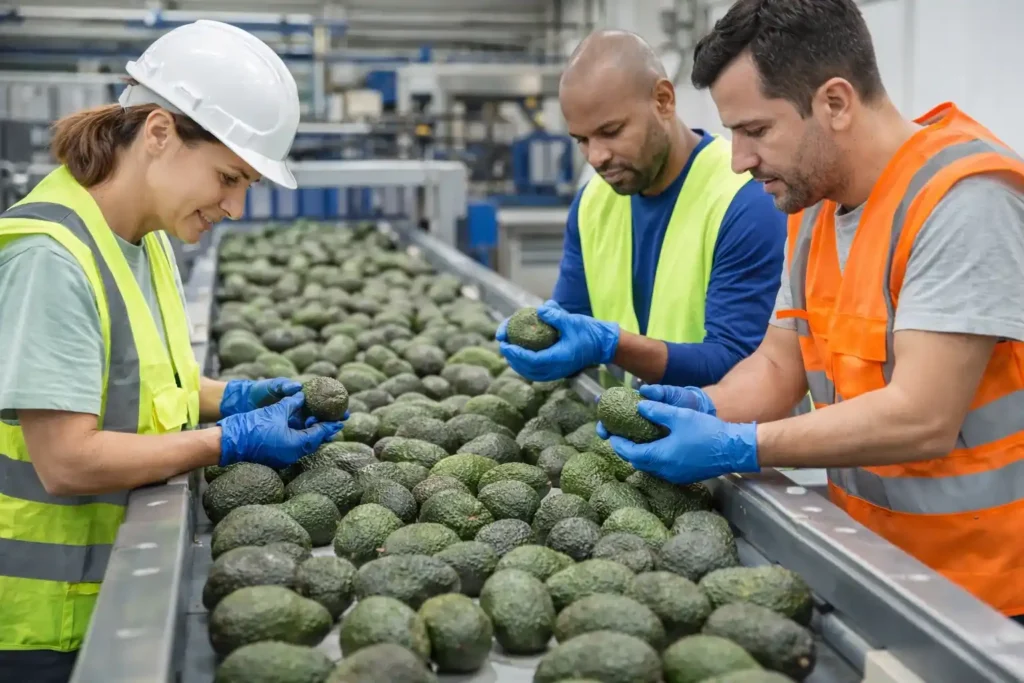
At Fruty Green we understand that the productivity of Hass avocados depends on well-executed agronomic decisions: healthy soil, stable irrigation, balanced nutrition and conditions that favor pollination.
We work under a responsible production approach to guarantee quality, consistency and sustainability, from cultivation to packaging.
Conclusion: producing more is not about applying more, but about adjusting better
Answering why your avocado tree isn't bearing fruit requires pinpointing exactly where the production is being lost.
When you properly adjust soil, water, nutrition, light, and pollination, the tree regains its balance and production consistently improves.
At Fruty Green Packing we support this process with technical expertise and standards geared towards exportable Hass avocados.