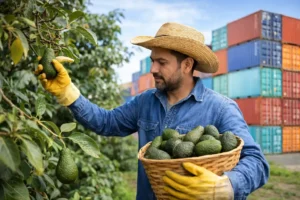
Talking about sustainability in the production of Colombian Hass avocado It's no longer an option, but a necessity. More and more buyers, supermarkets, and consumers want to know not only the origin of the fruit, but also the environmental impact generated during its production.
In this context, the water footprint and the carbon footprint They have become two key indicators for assessing how natural resources are used and what actions can be implemented to make production more efficient.
Beyond meeting a trade or certification requirement, measuring these footprints helps producers and exporters identify opportunities for improvement, optimize water and energy use, reduce emissions, and demonstrate their commitment to responsible agriculture with verifiable data.
What are water footprint and carbon footprint?
Although they are often mentioned together, each one measures a different aspect of environmental impact.
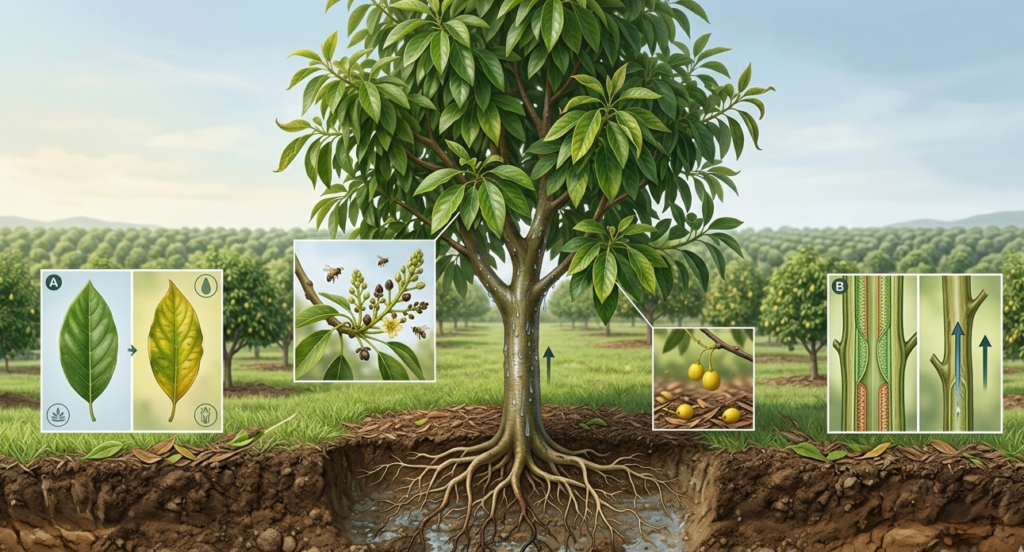
The water footprint It evaluates the water used during Hass avocado production, taking into account not only the amount consumed, but also the origin of that water and its effect on water resources.
The carbon footprint, For its part, it quantifies the greenhouse gas emissions generated during the production, packaging, and export of the fruit. These emissions may be related to the use of fuels, electricity, fertilizers, packaging materials, and transportation, among other processes.
Together, both measurements offer a more complete view of the environmental performance of an agricultural operation and allow for the establishment of strategies for continuous improvement.
The Colombian Hass avocado and a natural advantage
One of the most frequently asked questions about this crop is whether the Colombian Hass avocados consume a lot of water.
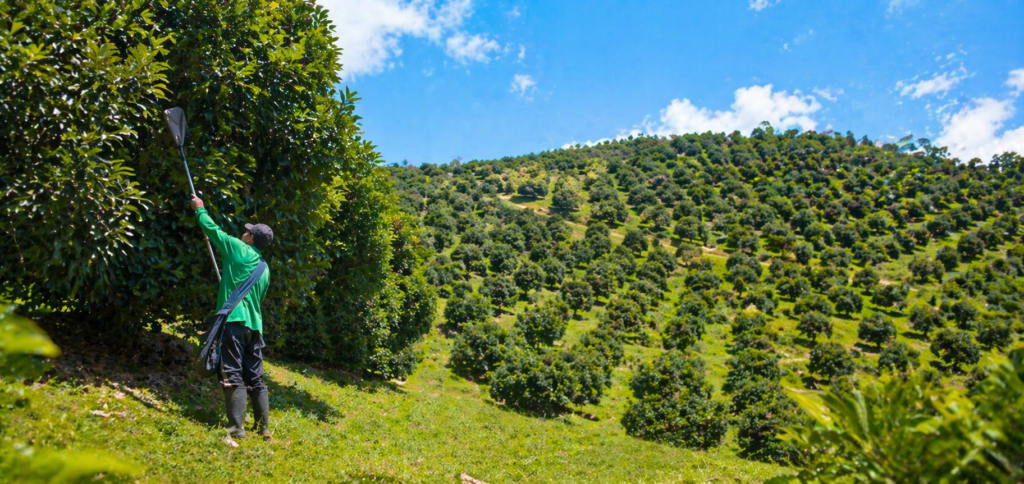
The answer depends on the location and the specific conditions of each farm. However, Colombia has one characteristic worth highlighting: many of its main producing areas experience abundant and relatively well-distributed rainfall throughout the year.
This means that a significant portion of the water used by trees comes from rain and not necessarily from irrigation systems.
From the perspective of the water footprint, this condition is relevant because rainwater corresponds to the green water footprint, while water extracted from rivers, streams, reservoirs or wells for irrigation is part of the blue water footprint.
In many producing regions of Colombia, the availability of rainwater can reduce dependence on irrigation, which represents an advantage over more arid agricultural areas where the artificial supply of water is indispensable during much of the production cycle.
This does not mean that all Colombian Hass avocados automatically have a low water footprint. Factors such as soil type, rainfall distribution, water availability in the watershed, irrigation efficiency, and management practices also influence the outcome.
Therefore, when analyzing the environmental impact of agriculture, it is not enough to know how many liters of water are used per kilogram of fruit. It is also necessary to understand Where does that water come from and how is it managed throughout the production process?.
How is the water footprint measured?
The most commonly used methodology divides the water footprint into three components:
- Green footprint: This corresponds to rainwater that is stored in the soil and is naturally used by the crop.
- Blue footprint: It refers to water extracted from surface or underground sources for activities such as irrigation.
- Gray footprint: It represents the theoretical volume of water needed to assimilate the pollutant load generated during production without exceeding environmental quality standards.
Analyzing these three components allows for a better understanding of the true impact of the crop on water resources and avoids drawing conclusions based solely on a total volume of water.
How is the carbon footprint measured?
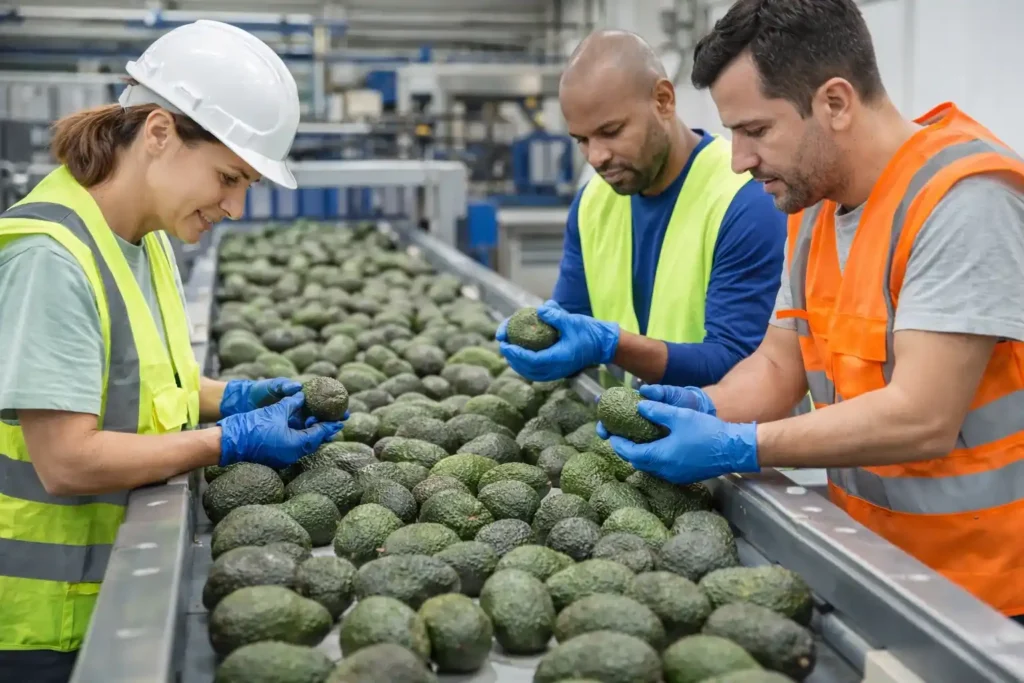
The carbon footprint is calculated by identifying all sources of greenhouse gas emissions that are part of the production chain.
The main ones include:
- fuel consumption in machinery and transport;
- electricity used on the farm and the packing plant;
- manufacturing and application of fertilizers;
- packaging materials;
- refrigeration and storage;
- national and international transportation;
- waste and spoilage management.
Generally, the result is expressed in kilograms of carbon dioxide equivalent (kg CO₂e) per kilogram of Hass avocado exported, allowing comparison of environmental performance between different periods and evaluation of the impact of implemented improvements.
What information is needed to calculate both footprints?
The first step is to gather reliable information from all stages included in the study.
| Element | Required information | Verification source |
|---|---|---|
| Electrical energy | kWh consumed | Bills and meters |
| Fuels | Liters of diesel, gasoline or gas | Invoices and logs |
| Fertilizers | Type and amount applied | Field records and invoices |
| Irrigation water | m³ used per batch | Meters and records |
| Precipitation | Rainfall recorded during the period | Weather stations |
| Production | Kilograms harvested and exported | Production records |
| Losses | Amount of discarded fruit | Quality reports |
| Packaging materials | Weight and type of materials | Invoices and suppliers |
| Transport | Distances traveled and type of vehicle | Logistics records |
Having organized information facilitates calculation and improves the traceability of results.
How to report water footprint and carbon footprint?
A good report should go far beyond presenting a final figure.
It is recommended to include:
- the objective of the measurement;
- the scope of the study;
- the methodology used;
- the functional unit (e.g., kg CO₂e per kilogram of exported avocado);
- the evaluated period;
- the sources of information used;
- the main results;
- the identified opportunities for improvement.
It is also important to clearly explain which processes were included and which were excluded from the analysis. This prevents misinterpretations and facilitates comparison with future measurements.
Measure to improve
Calculating water and carbon footprints should not be seen merely as a requirement for accessing certain markets. It is a tool that allows for a better understanding of operations, the identification of efficiency opportunities, and informed decision-making.
In the case of Colombian Hass avocado, The natural conditions of many producing regions represent an opportunity to manage water resources efficiently, taking advantage of rainwater and reducing, in many cases, dependence on irrigation.
However, this advantage can only be demonstrated through rigorous measurements, verifiable data, and transparent reporting. Sustainability is no longer communicated solely through good intentions; today it is built with reliable information that supports every decision and every step forward on the path to a more responsible production.
Frequently asked questions about the water footprint and carbon footprint of Colombian Hass avocados
What is the water footprint of a Hass avocado?
The water footprint is an indicator that measures water use during Hass avocado production. It considers not only the quantity of water used, but also its source, differentiating between rainwater, irrigation water, and the potential impact on water quality.
What is the carbon footprint of Hass avocados?
The carbon footprint represents the amount of greenhouse gases generated during the production, packaging, and export of Hass avocados. It is generally expressed in kilograms of carbon dioxide equivalent (kg CO₂e) per kilogram of fruit.
Does the Colombian Hass avocado consume a lot of water?
There is no single answer. In many agricultural regions of Colombia, a significant portion of the water used for crops comes from rainfall, which can reduce the need for irrigation. However, the water footprint depends on factors such as climate, soil type, water availability, and the management practices of each farm.
Why is it important to differentiate between rainwater and irrigation water?
Because not all water has the same environmental impact. Rainwater used by the crop corresponds to the green water footprint, while water extracted from rivers, reservoirs, or aquifers is part of the blue water footprint. Understanding this difference allows for a better interpretation of the crop's environmental performance.
What information is needed to calculate these footprints?
It is necessary to collect information on water consumption, electricity, fuel, fertilizers, production, transportation, packaging materials, waste, and other operational data. All information must be supported by verifiable records and documents.
How often should the water footprint and carbon footprint be measured?
The best approach is to perform an annual calculation and regularly monitor indicators such as water, energy, and fuel consumption. This allows for evaluating the evolution of environmental performance and identifying opportunities for improvement.
How do these measurements help Colombian Hass avocado exporters?
Measuring the water footprint and the carbon footprint allows us to identify opportunities to optimize processes, reduce resource consumption, strengthen the sustainability strategy, and respond with reliable information to the requirements of international buyers and markets.
Does the carbon footprint only include transportation?
No. In addition to transportation, emissions related to the consumption of fuels, electricity, fertilizers, packaging materials, refrigeration, waste management, and other processes that are part of the production chain can also be included, depending on the scope defined for the study.
What methodologies are used to measure these footprints?
The carbon footprint is usually calculated using methodologies such as the GHG Protocol wave ISO 14067, while the water footprint can be assessed using the methodology of the Water Footprint Network wave ISO 14046. The chosen methodology must be clearly stated in the report to ensure transparency and comparability of the results.
Why is measuring these footprints important for the future of Colombian Hass avocados?
International markets increasingly value transparency and responsible production. Having verifiable information on water use and carbon emissions helps strengthen buyer confidence, improve decision-making, and demonstrate the sector's commitment to more sustainable production.