Hass avocados require controlled temperatures to maintain firmness, texture, and flavor during post-harvest. When temperature management falls outside the appropriate ranges, physiological disorders appear that reduce commercial quality. In this article, we will explain what chilling injury in avocados is, how to identify its symptoms, why it occurs, and what specific practices help prevent it throughout the cold chain, from pre-cooling to export.
What is chilling injury and why does it affect Hass avocados?
Avocado chilling injury is a physiological disorder caused by exposure to excessively low temperatures (without freezing).
What does it cause in the fruit?:
- It affects tissues and membranes
- It causes uneven ripening.
- It deteriorates texture and internal quality
In Hass avocados, the condition worsens when there is prolonged cold or sudden temperature changes, and it is usually more noticeable when ripening begins outside of a cold storage room.
Typical symptoms and how to recognize them in quality inspection
Chilling injury in avocados can be seen on the outside, but it is often confirmed by opening the fruit or during ripening tests. The most common signs include:
- Uneven darkening of the skin and more pronounced lenticels, with a dull or "dull" appearance“
- Pulp with grayish to brown areas, sometimes diffuse and without a pattern associated with bruising
- Tissue with a translucent or "watery" appearance, especially near the mesocarp
- Uneven ripening: firm areas alongside soft areas, with a poor final texture
- Atypical aromas or flavors, with a sensation of "old" or low acceptability
To differentiate it from diseases or mechanical damage, it is advisable to check if the internal darkening appears without clear signs of impact, and if the batch was exposed to very low temperatures or sudden changes during logistics.
Common causes within the cold chain
A "correct" set point is not enough if the actual fruit temperature and ventilation are not properly controlled. If you would like to learn more about this process, you can find more information here: what is the cold chain.
Typical faults that trigger the problem:
- Areas too cold near the evaporator
- Pallets that block airflow
- Uncontrolled door openings and waiting times
- Incorrectly adjusted defrost cycles
- Poorly positioned sensors (do not reflect pulp temperature)
The entry condition also plays a role: batches with water stress, uneven maturity, or high variability tend to express more avocado cold damage as it matures.
Recommended temperature ranges and conditions to reduce risk
The correct ranges depend on maturity, cultivar and storage duration, but in Hass there are clear technical references to operate without triggering chilling injury in avocados.
Recommended operating ranges:
| Stage | Recommended range | Control key |
|---|---|---|
| Pre-cooling / waiting before packing | 6–10°C | Cool evenly and avoid thermal shock to the pulp. |
| Transport / export (green fruit) | 5–7°C (41–45°F) | Maintain stability; below 41°F (≈5°C) increases the risk of “chill damage”. |
| Controlled atmosphere storage (CA) | 5–7°C with 2% O₂ and 3–5% CO₂ | CA helps reduce chilling injury and extend post-harvest life when the system is well controlled. |
| Relative humidity | 90–95% | Minimizes dehydration without promoting condensation. |
Risk alerts (to adjust protocols)
- Exhibitions to 3–5°C for more than two weeks They may be associated with internal browning, maturation failure, and increased susceptibility to pathogens.
- Even lower temperatures (0–2°C) for more than 7 days They are related to external symptoms such as pitting, scalding, and blackening.
- In practice, uniformity rules: the "coldest zone" of the room or container usually defines the risk, even if the average seems correct.
Operational prevention: thermal control, monitoring and pallet handling
Preventing chilling injury in avocados requires discipline in details that may seem minor, but which define quality upon arrival. A key point is maintaining real and traceable thermal stability; to learn more about this, you can read what does it mean to maintain the cold chain.
Good practices that often make a difference in the field and packing include:
- Validate the maturity and homogeneity of the batch before entering cold storage, to avoid disparate ripening responses.
- Pre-cool gradually and evenly, avoiding boxes with "hot spots" that then cool down suddenly.
- Use data loggers and alarms, with sensors located where pulp and critical air points are present.
- Design stacking for effective ventilation: air channels, controlled height, and adequate separation from walls/evaporators
- Reduce door openings and times, and control defrosting to avoid intermittent extreme cold cycles
- Train staff in reading thermographs and in taking immediate corrective actions when deviations occur.
Pre-harvest factors that increase susceptibility to cold
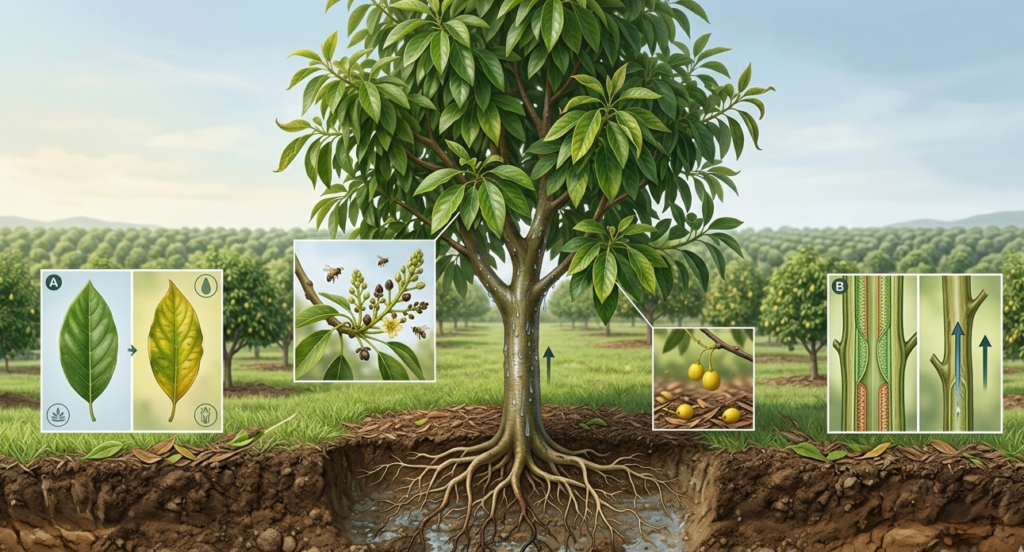
Cold tolerance is defined from the crop stage. A plot with high physiological variability tends to express it more readily. avocado cold damage during post-harvest, especially during ripening.
What conditions favor it?:
- Water stress (plants with periods of deficit or irregular irrigation)
- Nutritional imbalances that affect tissue firmness and structure
- Variability in maturity within the same batch (heterogeneous fruit)
How to reduce risk from the field:
- Homogenize the harvest with consistent maturity criteria
- Adjust irrigation and management to avoid pre-harvest stress
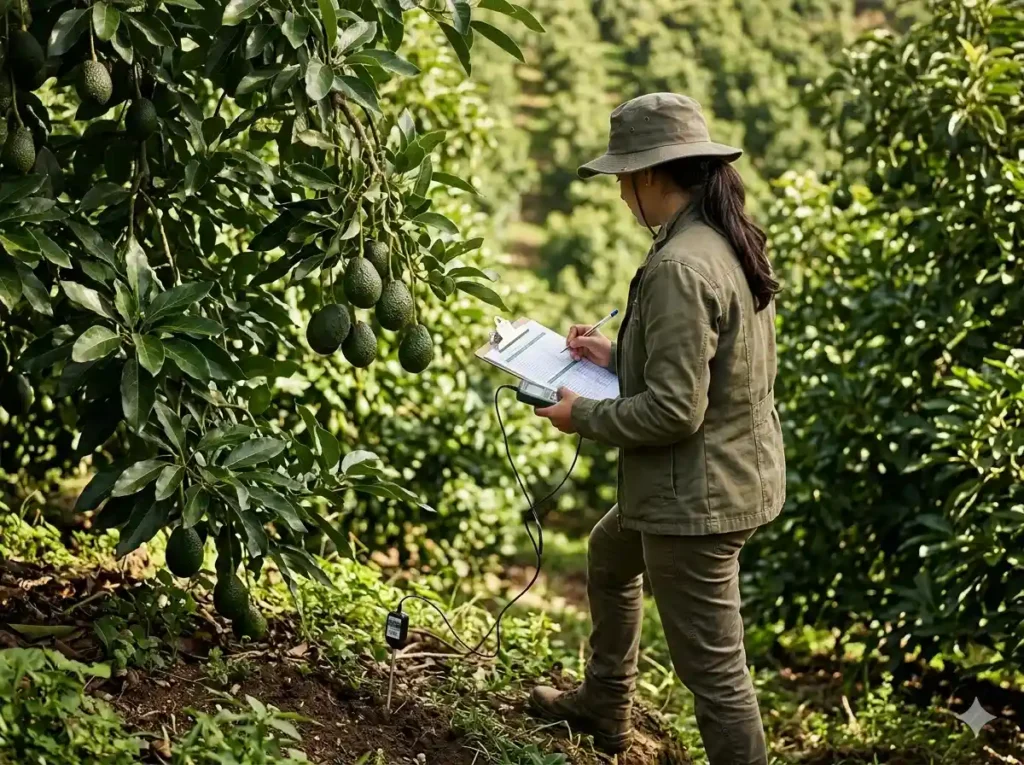
- Make nutritional decisions based on objective measurements; if you would like to learn more about this technical support, you can find out more here: foliar analysis in avocado.
Specific risks in exporting and international distribution
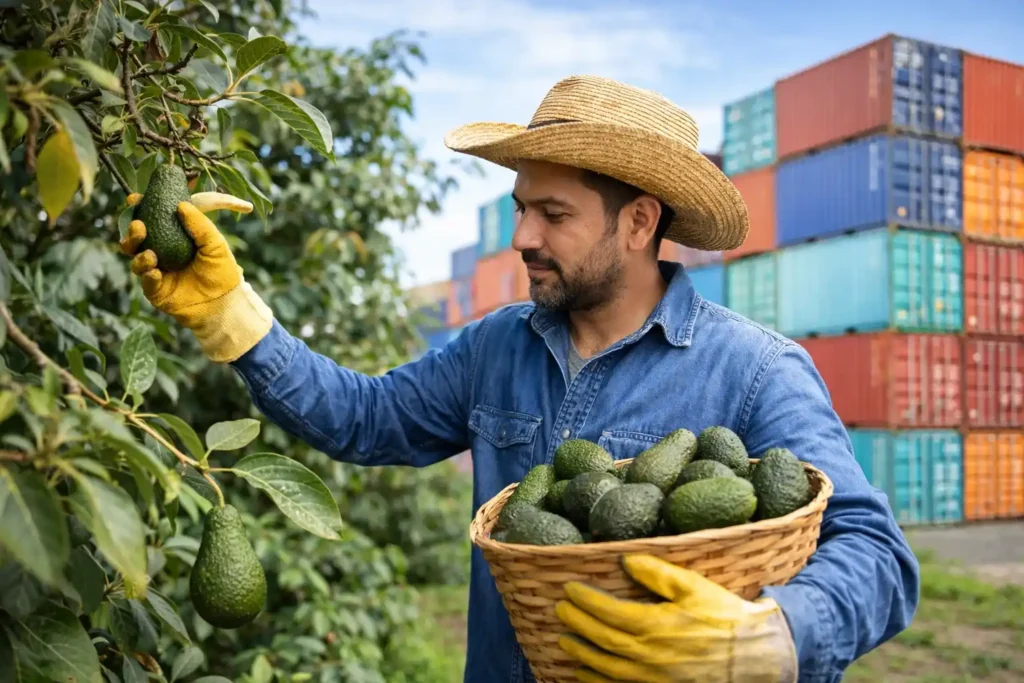
In exports, the risk of chilling injury to avocados increases in sections where the cold chain becomes unstable. The fruit can suffer temperature fluctuations that are not always detected in time, but manifest themselves at the destination during ripening.
Where the risk is concentrated
Container consolidation is often critical if the batch temperature is not uniform or if ventilation is limited by the loading pattern. During transshipments and while waiting in ports or distribution centers, delays and openings increase exposure to variations and create pockets of cold or warm air within the system.
What controls reduce claims at destination?
The technical recommendation is to maintain thermal traceability by batch and review temperature curves, not just single readings. It is also advisable to verify the performance of the refrigeration equipment before loading and ensure stacking that distributes air evenly to avoid cold concentrations on one side of the pallet.
What to do when chilling injury is suspected in a batch
If there are signs of exposure to low temperatures, it's advisable to confirm the actual condition before the problem manifests itself at the destination. The goal is to anticipate the fruit's behavior during ripening and reduce complaints about internal quality.
Quick verification in quality control
- Evaluate pulp in a representative sample (cuts to identify darkening or translucency)
- Perform controlled ripening tests to observe uniformity and final texture
- Review batch temperature records to identify deviations or fluctuations
Batch management when infection is confirmed
- Avoid prolonged cold storage unless strictly necessary
Early diagnosis helps reduce losses, make timely logistical decisions, and protect the supplier's reputation. - Segregate by condition (separate fruit with higher risk)
- Adjust ripening windows and prioritize rotation according to destination and transit time
Fruty Green and our commitment to quality
At At Fruty Green We work to ensure the quality of Hass avocados is maintained from cultivation to market. Our approach integrates good agricultural practices, post-harvest control, and cold chain discipline to minimize risks that affect the fruit's internal condition.
We operate with demanding standards, certifications, and a sustainability vision that seeks consistency and traceability in every shipment. This combination allows us to meet the requirements of national and international markets with a reliable product and a responsible process.
Quality that is preserved until the destination
Maintaining the correct temperature is not just about "cooling": it's about ensuring uniformity, avoiding extremes, and guaranteeing that the avocado arrives with predictable ripeness and consistent internal quality. When the cold chain is managed with technical expertise, the fruit's value is protected, rejections are reduced, and responsible production is strengthened, ensuring that the fruit reaches the consumer intact, regardless of its origin.
At Fruty Green, we take care of every detail of the Hass avocado to ensure it retains its quality throughout the logistics process, using responsible processes and experience in demanding markets.