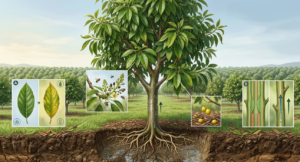
The success of Hass avocado production depends largely on the nutritional management of the crop. Although fertilization programs are usually designed based on soil analysis, these don't always accurately reflect what the plant is actually absorbing. This is where the avocado foliar analysis It becomes an indispensable tool: it allows you to evaluate the actual levels of nutrients within the plant and make more precise agronomic decisions.
This article offers a detailed guide to understanding how to perform a foliar analysis on avocados, how to interpret the results, and how to adjust fertilization in a technical, efficient manner directly applied to the crop.
Importance of avocado foliar analysis in Hass production
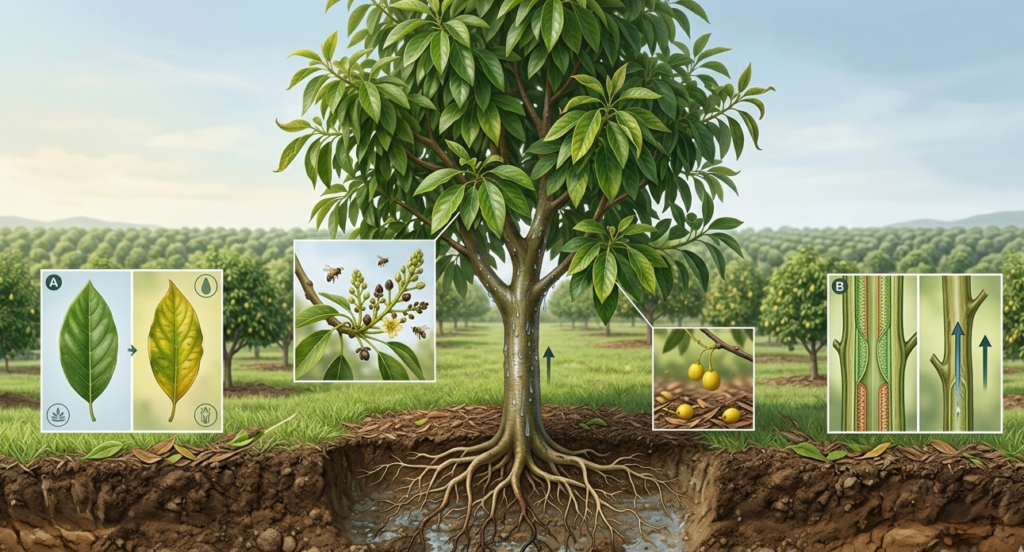
He avocado foliar analysis It allows you to know the tree's nutritional status in real time, providing a precise snapshot of how the plant is absorbing nutrients such as nitrogen, phosphorus, potassium, calcium, magnesium, and essential micronutrients. Unlike soil analysis, foliar analysis evaluates effective nutrition, not just that available in the root zone.
Why it's indispensable in Hass avocados
- Identify hidden weaknesses: Some nutritional symptoms are not visually apparent until advanced stages. Foliar analysis detects early imbalances.
- Optimize fertilization: It allows adjusting doses, frequencies and application methods, avoiding extra costs and unnecessary application of products.
- Improves fruit quality: Balanced nutrition is reflected in caliber, consistency, oil content, and post-harvest life.
- Increased performance and consistency: Well-nourished trees produce more uniform fruit and in greater quantity.
- Reduces physiological risks: Nutrient deficiencies such as boron, calcium or zinc cause deformities, fruit drop and fruit set problems.
At Fruty Green, we carry out avocado foliar analysis continuously to ensure that our trees maintain optimal nutrition levels throughout the entire production cycle.
How to correctly perform an avocado foliar analysis
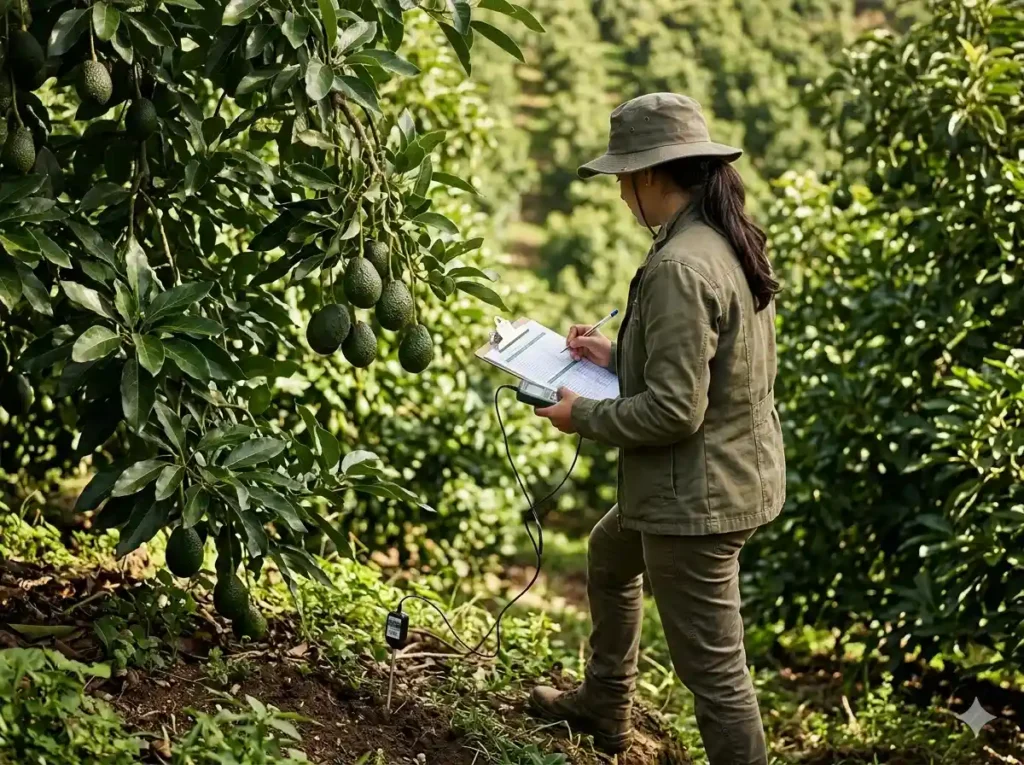
A leaf analysis is only useful if the samples are taken correctly. Therefore, this process must follow a technical protocol that ensures accurate and representative results.
When to take the samples
The ideal time is usually between mid- and late summer, when nutrients are relatively stable in the plant. However, each region may have climatic variations that modify the recommended time.
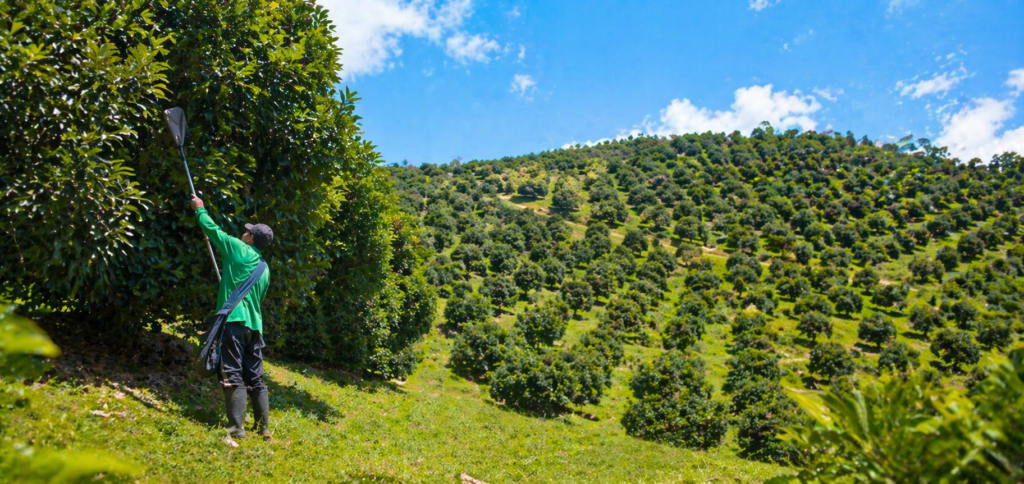
How to collect leaf samples
To ensure a good avocado foliar analysis, Follow these steps:
- Select representative trees: Avoid planting young, diseased, or water-prone trees, as they do not reflect the average performance of the plot.
- Choose ripe leaves: Take fully developed leaves from current season shoots, preferably from branches exposed to the sun.
- Appropriate quantity: Collect between 80 and 120 leaves per sample, depending on the size of the laboratory and the requirements of the analysis.
- Avoid pollution: Do not touch the leaves with dirty or wet hands and do not use plastic bags, as they retain moisture and can alter the results.
- Proper storage: Use labeled paper bags and send the samples to the laboratory as soon as possible.
At Fruty Green, we rigorously follow these steps to obtain a reliable and replicable foliar analysis. Want to see how this process is performed in the field? We invite you to watch this short and helpful video: “How to Collect Leaves for Foliar Analysis in Avocado”.
Interpretation of results of avocado foliar analysis
Once the lab results are received, the next step is to interpret them correctly. This allows for the identification of nutritional deficiencies, excesses, and imbalances that may be affecting productivity.
Reference values for essential nutrients
The following are standard ranges for Hass avocado leaves:
- Nitrogen (N): 2.2–2.8%
- Phosphorus (P): 0.10–0.15%
- Potassium (K): 1.0–2.0%
- Calcium (Ca): 1.0–2.0%
- Magnesium (Mg): 0.25–0.50%
- Zinc (Zn): 20–50 ppm
- Iron (Fe): 50–200 ppm
With these values you can identify:
- Deficiencies: Levels below the recommended range.
- Excesses: Levels that are too high and can cause toxicity.
- Antagonisms: A nutrient that inhibits the absorption of another (for example, excess potassium reducing the absorption of magnesium or calcium).
For example:
- If the analysis indicates low potassium, The fruit is likely to have less firmness or defects in the cuticle.
- If there is zinc deficiency, The shoots may show short internodes and the fruit may be smaller.
- A high nitrogen level It usually causes excessive foliage and reduced fruit set.
Properly interpreting the ranges allows for quick and accurate decisions based on the realities of the crop. Want to learn more about avocados and their varieties? We invite you to read our article: “Learn about the Different Varieties of Avocados.”.
How to adjust fertilization based on the results of foliar analysis?
The greatest value of avocado foliar analysis It is their ability to guide an efficient and evidence-based fertilization plan.
Recommendations according to the deficient nutrient
- Nitrogen: Apply sources such as ammonium nitrate or urea in moderate doses to avoid excessive vegetative vigor.
- Phosphorus: Incorporate triple superphosphate, natural phosphates, or localized applications in the root zone.
- Potassium: Use potassium sulfate or potassium nitrate, especially during fruit filling stages.
- Calcium: Improve availability with agricultural gypsum or foliar applications of calcium at critical times.
- Magnesium: Supplement with magnesium sulfate or foliar mixtures.
- Zinc and other micronutrients: Apply chelates, sulfates or multinutrient foliar fertilizers.
Additional considerations for an effective adjustment
- Application frequency: Rapidly mobile nutrients may need more frequent applications.
- Product compatibility: Avoid mixtures that precipitate and affect the irrigation system.
- Weather conditions: Foliar applications work best during the cooler hours of the day.
- Application method: Fertigation is an efficient alternative when nutritional levels need to be corrected quickly.
At Fruty Green, we combine foliar and soil analysis to design more comprehensive and sustainable nutritional programs. Want to improve your crop's performance? Discover how in our article: “"What Fertilizer is Used for Avocados and How to Choose the Best One for Your Crop?"”.
Additional factors that influence Hass avocado nutrition
Although avocado foliar analysis is essential, it is not the only tool for maintaining a healthy crop. Other agronomic factors must also be considered:
1. Cold chain management
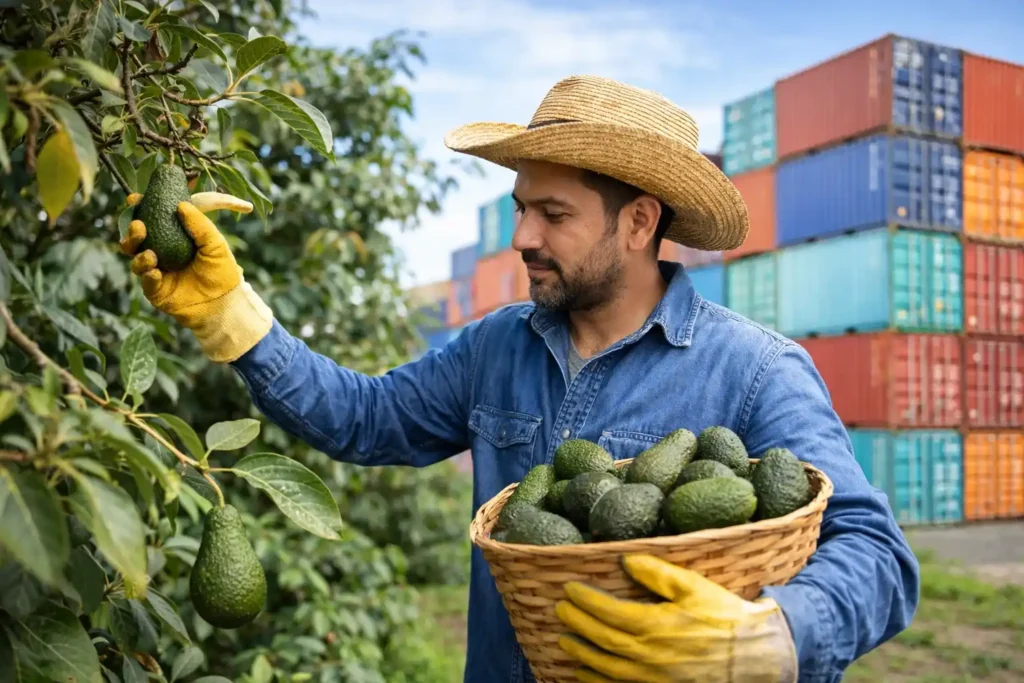
Well-nourished fruit withstands transport better and has a longer post-harvest life. Proper nutrition is complemented by efficient cold storage management.
2. Integrated crop management
The yield of Hass avocados also depends on:
- Proper pruning
- Control of pests and diseases
- Efficient irrigation
- Appropriate planting density
All these factors must be in harmony with the nutritional program.
3. Certifications and quality standards
Producers who perform regular foliar analyses tend to comply more easily with regulations such as GlobalG.AP, which requires clear records of nutritional management.
A well-applied foliar analysis transforms productivity
He avocado foliar analysis It is one of the most accurate and effective tools for optimizing crop nutrition. By interpreting the results technically and applying specific adjustments to fertilization, it is possible to improve fruit quality, increase yield, and strengthen the overall health of the tree.
At Fruty Green, we use foliar analysis as the basis for our nutritional decisions, which allows us to guarantee export-quality fruit and sustainable crops over time.