The world of avocados is as diverse as it is fascinating. Among its best-known varieties, the Hass and Criollo avocados stand out for their unique characteristics. Understanding the difference between Hass and Criollo avocados allows consumers, producers, and exporters to make informed decisions about which variety to choose based on their culinary or commercial needs.
In this Fruty Green guide, we will explore in detail the contrasts between both varieties, from flavor and texture to their export potential and gastronomic value.
Taste and Sensory Profile
Before getting into technical or commercial aspects, it is worth focusing on the most noticeable feature: the taste.
Hass Avocado: Intense and Buttery
He Hass avocado It's famous for its rich, creamy, and slightly nutty flavor. Its high content of healthy fats gives it a smooth, spreadable texture and a lingering, soft mouthfeel. It's a favorite for making guacamole, gourmet toast, or creamy salads, as its flavor remains consistent even after ripening.
Criollo Avocado: Fresh and Traditional
The Criollo avocado, typical of tropical regions of Latin America, has a milder, more herbal flavor. Its flesh is lighter and more watery, with a lower fat content, giving it a fresher, more natural profile. It's ideal for those who enjoy light, local dishes, where authenticity is prioritized over richness.
In summary, the difference between Hass and Criollo avocados in flavor lies in the intensity and creaminess of the Hass versus the vegetal freshness of the Criollo.
Texture and Culinary Applications
The texture directly influences how each type of avocado is used.
Hass texture
Hass avocados have a creamy, uniform consistency, making them easy to use in a variety of recipes. Their controlled firmness allows them to be sliced without falling apart, mashed without losing their structure, or easily blended into smoothies, desserts, or sauces.
Criollo Texture
In contrast, the Criollo avocado has a more fibrous and watery texture. Its thin skin and lower pulp density limit its use in dishes requiring firmness, but make it ideal for fresh sauces, traditional salads, and homemade side dishes.
If you're looking for creaminess and versatility, choose Hass; if you prefer lightness and natural flavor, opt for Criollo.
Export Potential and Useful Life
One of the main differences between Hass and Criollo avocados lies in their preservation and transport capabilities, key factors for export.
Hass Avocado: World Leader in Exports
Thanks to its thick, rough skin, the Hass avocado tolerates transport and handling better. Its longer shelf life facilitates international distribution. Furthermore, it maintains an attractive appearance throughout the ripening process, making it the most exported variety in the world.
At Fruty Green, we guarantee that every Hass avocado meets international quality standards, controlling temperature, humidity, and ripening throughout the cold chain. Want to export this type of avocado? Discover the step-by-step process in our article: “What are the requirements for exporting Hass avocados from Colombia?”
Criollo Avocado: Local Production and Freshness
The Criollo avocado, while exquisite, is more susceptible to damage during transport due to its thin skin and shorter shelf life. This limits its presence in global markets, but gives it great value in local and regional trade, where its fresh, natural flavor remains highly prized.
In logistics and export, the difference between Hass and Criollo avocados is clear: the former is resistant and global; the latter, delicate and local.
Nutritional Benefits and Gastronomic Value
Both varieties are highly nutritious, but they differ in composition:
- Hass Avocado: Higher content of monounsaturated fats, potassium and vitamin E. Excellent source of healthy energy.
- Criollo Avocado: More water and fiber, ideal for light diets and frequent consumption.
- Both contain natural antioxidants that benefit cardiovascular health and digestion.
Hass is more valued in international gastronomy for its consistency and stable flavor, while Criollo is a symbol of tradition and freshness in Latin American cuisine.
Tips for Choosing Between Hass and Criollo
- For creamy preparations or export: Choose Hass.
- For immediate consumption and fresh taste: opt for Criollo.
- Check your skin: The Hass apple's skin is rough and dark when ripe; the Criollo apple's skin is smoother and greener.
- If you plan to keep them for several days, the Hass offers a longer shelf life.
Commitment to Quality at Fruty Green
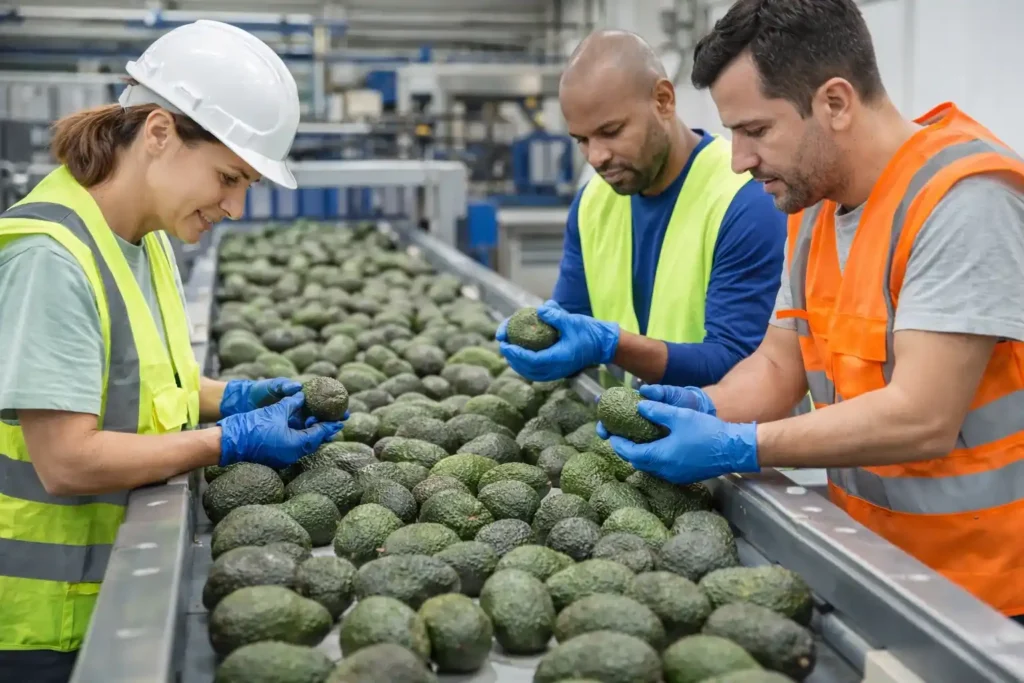
At At Fruty Green, Each avocado (whether Hass or Criollo) undergoes rigorous selection, grading, and quality control processes. Thanks to an efficient cold chain and international certifications, we ensure that our products retain their freshness, texture, and flavor from the farm to your table.
Our experience in cultivation and export allows us to offer the highest quality avocados, respecting international standards and promoting sustainable agricultural practices. Want to learn more about Colombian avocado varieties? Watch this short video: “What are the varieties of Colombian avocado?”
Two Varieties, One Purpose
The difference between Hass and Criollo avocados goes beyond their flavor or texture. They represent two ways of enjoying avocados: one geared towards export and the other towards traditional consumption. While Hass conquers global markets, Criollo keeps the essence of the Latin American countryside alive.
Both reflect the richness of the fruit and Fruty Green's commitment to offering products that combine quality, freshness, and authenticity. Want to learn more about our avocado varieties? Visit our website and discover how Fruty Green promotes responsible cultivation and sustainable export of Colombian avocados.