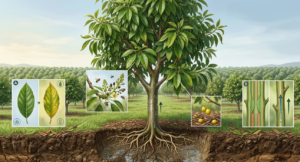
The Hass avocado is a highly valued crop for its flavor, texture, and nutritional value. However, like any agricultural product, it is susceptible to insects, fungi, and other organisms that can compromise its yield and quality. Knowing how to eliminate avocado tree pests is essential for maintaining healthy, sustainable, and productive orchards.
In this Fruty Green guide you will learn effective strategies to prevent, control and manage the main pests of Hass avocados through sustainable agricultural practices and biological control.
Importance of prevention in pest management
Before considering treatments, it is essential to adopt preventative measures that reduce the likelihood of infestations. Prevention is the foundation of effective integrated pest management (IPM).
Healthy soil and proper site selection
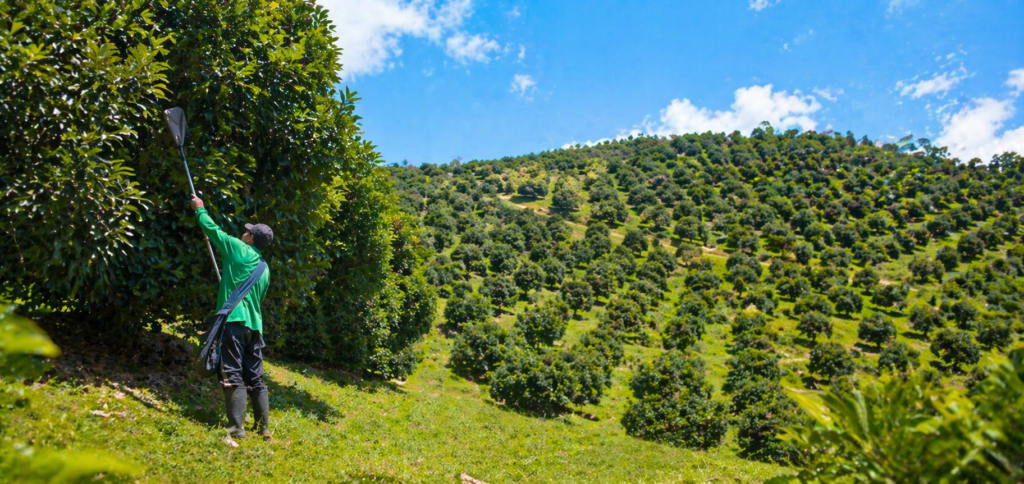
Well-drained soil rich in organic matter strengthens roots and improves the tree's natural resistance. At Fruty Green, we recommend regular soil analysis to determine its composition and adjust fertilization accordingly.
Use of certified seedlings
The starting point for preventing pests is planting healthy, certified seedlings. Seedlings from unregistered nurseries can carry insects, nematodes, or diseases that can then spread to the crop.
Crop rotation and land clearing
Practicing crop rotation and removing plant debris after each harvest reduces breeding grounds for pests. Furthermore, proper management of organic matter prevents the appearance of harmful larvae and fungi.
Want to learn about the main avocado diseases? Watch this short video: “Avocado diseases.”.
Main pests of the avocado tree
Knowing the most common pests is key to understanding how to effectively eliminate avocado tree pests.
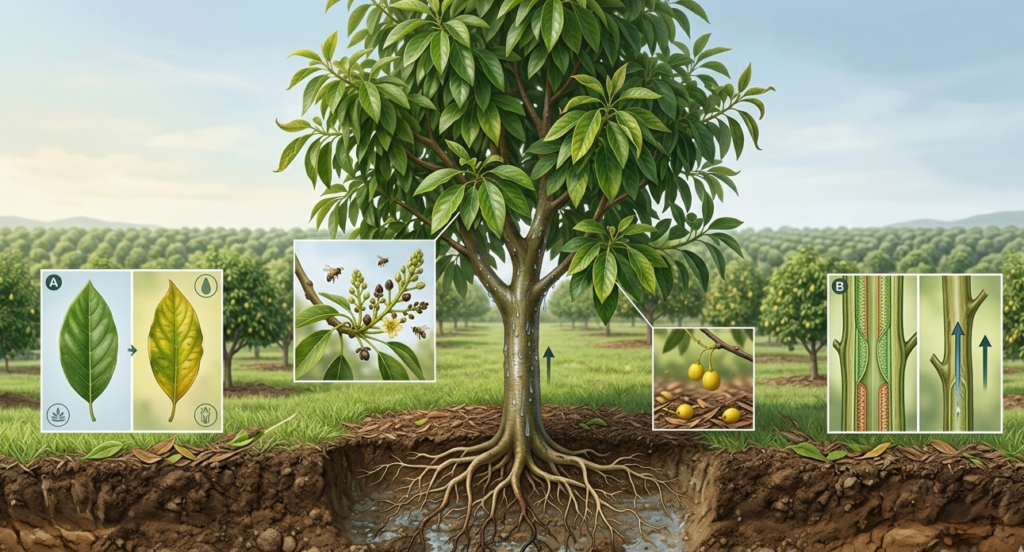
- Mites (Tetranychus spp.)They cause yellowish spots and loss of vigor.
- Thrips (Heliothrips haemorrhoidalis)They cause discoloration and scarring on young leaves.
- Whitefly (Trialeurodes vaporariorum)It weakens the plant by sucking sap and leaving molasses.
- WoodliceThey cause dark spots and weaken the tree.
- Stem or fruit borers (Heilipus lauri)They bore into branches and fruit, severely affecting production.
Early identification of these agents allows for targeted control measures and prevents further damage. Want to learn more about avocado diseases? We invite you to read our article: “Hass Avocado Diseases: How to Identify and Control Them?”
Biological control: a sustainable and effective alternative
Biological control involves using living organisms (such as insects, fungi, or bacteria) that act naturally against pests. It is an environmentally friendly, safe, and highly efficient strategy.
Advantages of biological control
- Reduce the use of chemical pesticides, protecting the environment and beneficial wildlife.
- It promotes ecological balance within the garden.
- It prevents resistance in pest populations.
Examples applied to Hass avocado
- Natural predatorsLadybugs and lacewings that eliminate aphids and mealybugs.
- Entomopathogenic fungi: Beauveria bassiana or Metarhizium anisopliae, capable of controlling larvae and adults of various species.
- Beneficial bacteria: Bacillus thuringiensis, effective against defoliating caterpillars without affecting other organisms.
At Fruty Green we promote the use of certified bio-inputs, which allow for sustainable and efficient management of avocado crops.
Good agricultural practices for a healthy crop
Good agricultural practices (GAP) complement prevention and biological control. Applying them correctly keeps trees strong, reduces stress, and limits pest development.
Constant monitoring
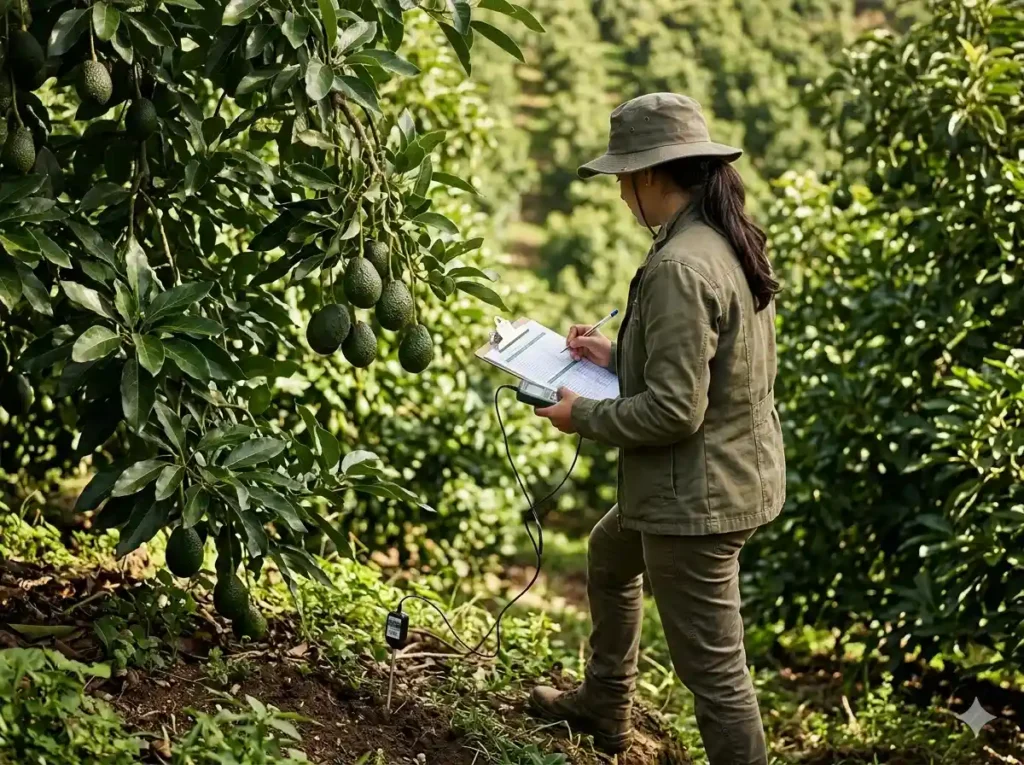
Monitoring is essential to detect any signs of infestation early. Check leaves, branches, and fruit weekly for:
- Stains, deformations or perforations.
- Presence of insects or molasses residue.
- Symptoms of defoliation or yellowing.
Using pheromone traps and sticky traps helps measure pest populations and determine the opportune time to act.
Proper use of plant protection products
In severe infestations, it may be necessary to apply phytosanitary treatments. To do this correctly:
- Choose products specifically designed for the target pest.
- Rotate active ingredients to avoid resistance.
- Apply the recommended doses and during times of low solar radiation.
- Always use protective equipment and follow environmental regulations.
Garden sanitation
- Sanitary pruning to remove damaged branches and improve ventilation.
- Collection of fallen or infected fruit to prevent reinfestation.
- Weed control, since many species serve as a refuge for insects.
These preventative actions are an essential part of how to eliminate avocado tree pests in a sustainable and cost-effective way.
Integrated pest management (IPM)
Integrated Pest Management (IPM) combines all the previous strategies to maintain a natural balance and minimize the use of chemicals. Its success lies in constant observation and data-driven decision-making.
Stages of an effective IPM
- Constantly monitor the crop.
- Correctly identify the pest.
- Define action thresholds (when the damage justifies intervention).
- Apply biological or physical methods first.
- Use chemicals only if strictly necessary and responsibly.
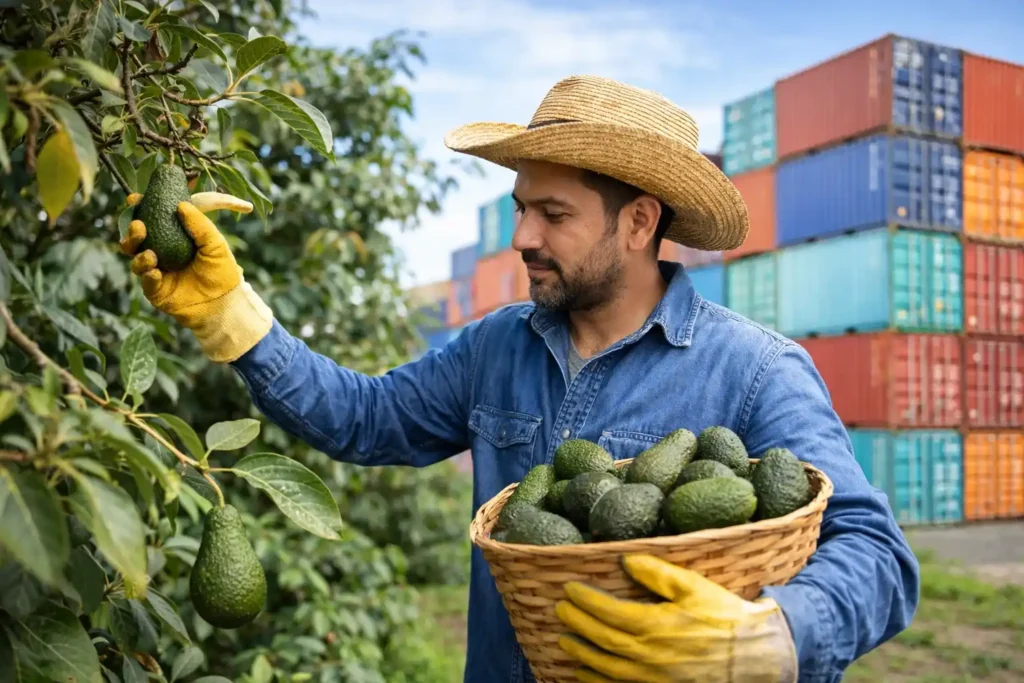
The result: healthy orchards, less chemical waste, and sustainable, competitive Hass avocado production for export. Want to know what it takes to get a good avocado to any part of the world? We invite you to read our article: “What is the process for exporting avocados to the United States?”
Integrated management for healthier crops
Knowing how to eliminate avocado tree pests involves understanding that there is no single solution, but rather a combination of preventative, biological, and cultural techniques that work together.
At Fruty Green, we promote integrated pest management as an efficient and sustainable model aligned with international Hass avocado quality standards. Through good agricultural practices, constant monitoring, and technology, we guarantee healthy orchards and harvests of excellent quality.